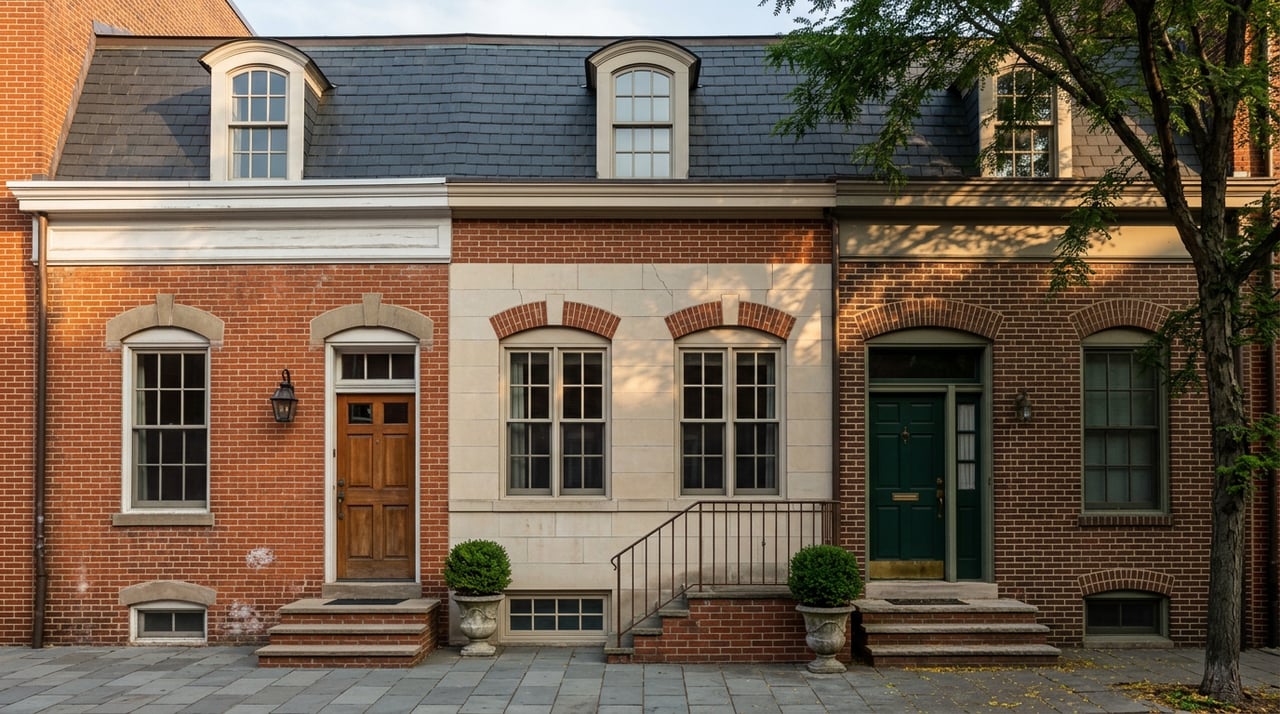
On December 16, 2025, the York City Council took up Resolution No. 90. It was a short piece of business: a vote to accept the Historical Architectural Review Board's recommendations for work at 413, 417, and 423 W. Market St., at 9 and 15 E. Philadelphia St., at 252 E. Princess St., and at 138 E. Market St. Council passed it 5-0. Nobody in the room seemed to think it was in doubt.
That's exactly the point most buyers, sellers, and renovators inside York's historic district miss. The board that reviewed those projects, weighed the window replacements and the masonry work and the porch details against a design standard, and voted to approve them, doesn't have the authority to approve anything. It only gets to recommend. The actual approval happens later, at a City Council meeting, in front of five elected officials who have, on record, overturned the board before.
If you're buying a rowhome on Beaver Street or listing one on Princess Street, that distinction changes how you should plan a renovation, price a timeline, and talk to a buyer who's worried about "historic district restrictions." The restrictions aren't the risk. The two-step approval chain is.
HARB Recommends. Council Decides.
York's Historical Architectural Review Board has been reviewing exterior work in the city's historic core since 1970, when City Council established the first HARB district by ordinance. A second district followed in 1975, and in 2002 the two were merged into the larger district that exists today, running through streets like Queen, George, Princess, College, Beaver, Jackson, Market, Philadelphia, Cottage, and Smith.
The board itself is built to represent a cross-section of interests: seven regular members and three alternates, appointed by City Council, with mandated seats for a representative recommended by the York County Heritage Trust, a registered architect, a licensed real estate broker, and a building inspector. It meets the second and fourth Thursday of each month at 6 p.m. in City Council Chambers at 101 S. George St.
What HARB cannot do is issue a final approval. The city's own design guidelines spell this out directly: HARB is a recommending board only, and its recommendations go for official ratification. Only after Council approves can an applicant go to the Bureau of Permits to pull the actual building permit. Council votes in favor of most HARB decisions, but it has overturned the board in the past, on both major and minor issues.
That word "overturned" is doing real work. It means a homeowner who gets a favorable HARB recommendation, maybe after weeks of back and forth over window profiles or roofing material, can still walk into a Council meeting and watch a majority vote go the other way. It also means a denial at the HARB level isn't automatically the end of the road. An applicant can appeal.
What Actually Triggers a Review
Not every project inside the HARB boundary needs to go through this. The trigger is visibility: any exterior change visible from a public street or alley, including the rear of a building and any garage or outbuilding visible from the alley. That threshold catches more than most people expect. It covers the installation of signage and fencing, and it covers the chemical or water cleaning of masonry surfaces, which surprises owners who assume power-washing brick is routine maintenance.
There's a specific carve-out worth knowing before you assume the worst. HARB has no jurisdiction over paint color choice, and painting a surface that's already been painted doesn't require review. A handful of other categories are handled as exemptions or staff-level reviews rather than a full board hearing: sidewalks and patios, freestanding objects like flagpoles or benches, in-kind roofing repairs, mailbox installation, and temporary banners. Those still require an application, just a lighter one.
Everything else visible from the street, from a new front door to a rebuilt porch to an addition, goes through the full process: HARB hearing, then Council ratification.
Four Ways a HARB Application Can Go
When a project does land in front of the board, there are only four possible outcomes:
| Outcome | What it means |
|---|---|
| Approval as presented | The application moves to Council as submitted |
| Approval as amended | The board attaches conditions before forwarding it |
| Tabled | The applicant is sent back to explore other options or provide more detail |
| Denial | The applicant can withdraw, resubmit, or appeal to Council |
Even a clean "approval as presented" from HARB is still a recommendation, not a permit. Council's vote is the step that actually clears the path to the Bureau of Permits.
The Cost of Skipping the Line
Pennsylvania's Historic District Act, which authorized boards like HARB across the state, exists to let municipalities regulate the exterior of buildings inside designated districts. York's own guidelines are blunt about what happens if a property owner starts work without a permit and a Certificate of Appropriateness in hand: a stop work order can be issued, and the owner may be required to pay a fine.
For a buyer under contract on a rowhome with a deadline in mind, or a seller who wants to finish a porch repair before listing, that's the scenario worth planning around. A project that looks like a two-week job on paper can stretch across two HARB meeting cycles and at least one Council vote before a permit is even in hand.
The Designation Buyers Actually Notice Isn't the One That Regulates Anything
Here's where a lot of confusion starts. York also has a separate, much larger historic designation: the York Historic District listed on the National Register of Historic Places, which covers 309 contributing buildings in the city's central business district and surrounding residential blocks, including landmarks like Christ Lutheran Church, the Odd Fellows Hall, the U.S. Post Office, and the Strand-Capitol Theatre. It's the designation most buyers hear about, and it's the one most likely to show up in listing descriptions.
But National Register status is largely honorary. It opens the door to certain tax credits and grant programs. The local HARB district overlaps with but is not the same footprint as the National Register district.
A buyer who hears "historic district" and assumes it's one designation, one set of rules, is starting from the wrong map. The question that actually matters before an offer or a listing goes out is whether the property sits inside the HARB boundary, not whether it happens to be inside the National Register area.
What to Check Before You Buy or List
Before you write an offer on a rowhome in downtown York, or before you list one with renovation plans in the disclosure conversation, a few questions are worth settling directly with the city rather than assuming:
- Is the property inside the HARB district boundary, using the city's official HARB map, not just a general sense of "old York"?
- Has any exterior work been done on the property recently, and if so, was it HARB-reviewed and Council-ratified, or done without a Certificate of Appropriateness?
- If you're planning renovations, which category do they fall into: full HARB review, staff review, or exemption?
- How many Council meetings realistically stand between a HARB hearing and a usable permit, given the current meeting calendar?
None of this makes a HARB-district property a worse buy. Design-reviewed neighborhoods tend to hold their character, and that consistency is part of what makes streets like Market and Philadelphia worth walking. It just means the renovation math has an extra step that a generic historic-home checklist won't mention: the approval you get from the preservation experts isn't the approval that counts. The one from City Council is.
A Few Questions Worth Asking Directly
Does getting HARB approval guarantee my permit will be issued? No. HARB's recommendation still has to be ratified by a City Council vote before the Bureau of Permits will issue anything.
If my home is only in the National Register district, do I need HARB approval? Not automatically. Whether you need HARB approval depends on whether the property also sits inside the separate, city-drawn HARB boundary.
What if I start exterior work before Council votes? The city can issue a stop work order and require a fine, on top of the delay of having to reopen the process.
Know Which Rulebook Applies Before You Sign Anything
York's historic core is one of the reasons buyers are drawn to the city in the first place, but the paperwork behind that character runs through two separate bodies, not one. If you're evaluating a property inside the HARB district, whether you're buying it, selling it, or already living in it and planning a project, it's worth having someone walk the actual approval chain with you before a timeline gets built around assumptions.
The team at Hoover Lynam & Associates works across York's historic neighborhoods regularly and can help you check where a property actually sits on the HARB map before you make an offer or set a renovation deadline. If you're weighing a move in York, get your home valuation started and we'll walk the district specifics with you directly.
This article is general information, not legal, tax or financial advice. Consult a qualified professional about your situation.