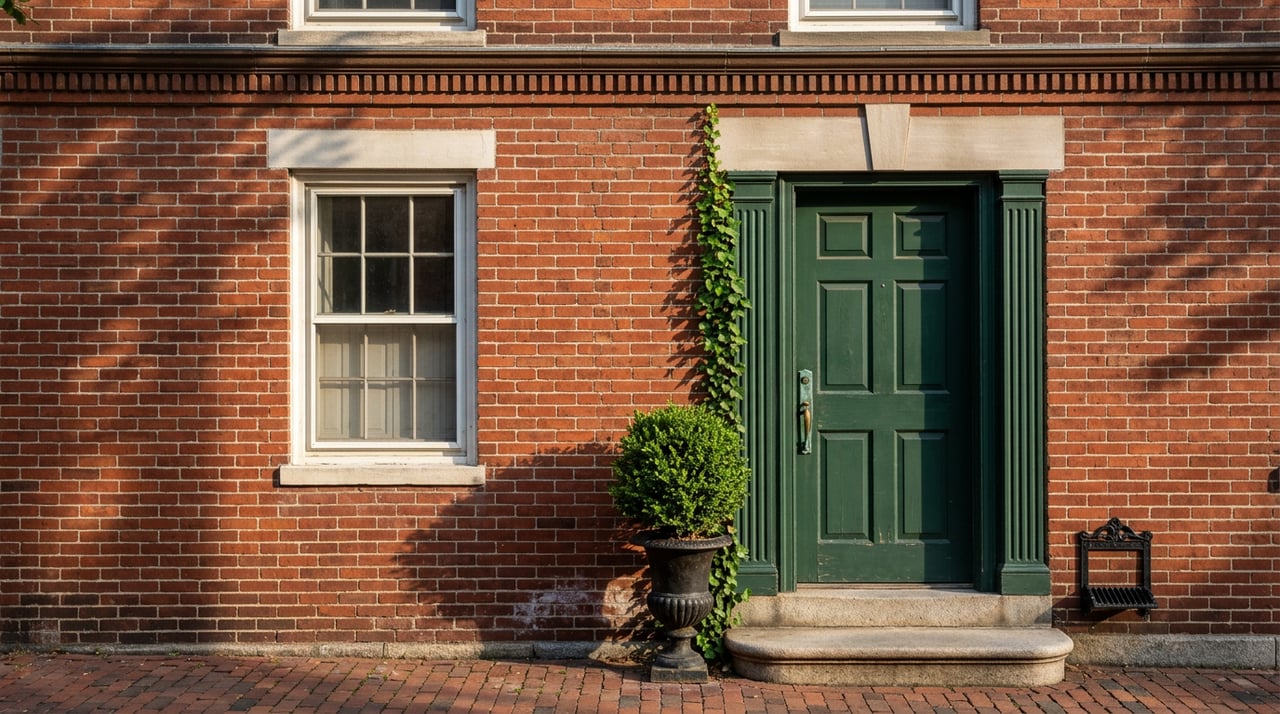
As LancasterOnline reported, Lancaster City Council's community planning chair, Amos Stoltzfus, said, "At this point, the horse has left the barn."
He made that remark at a committee meeting on March 2, 2026, while deciding what to do about a third-floor renovation at 444 W. Lemon St. The work was already built: a rear addition, a deck, a sliding door, cypress siding painted a shade of yellow that stood out against the block. The only question left on the table was whether the city would force the owner, Nathan Charles, to tear it back out.
That question existed because of a mismatch nobody caught until the work was mostly finished. The building permit, issued in October 2024, described the third-floor project as interior work. It wasn't. A preservation specialist and neighbors spotted the exterior changes over the summer of 2025, construction was halted in August, and by September 15 the city's Historical Commission had recommended denying a certificate of appropriateness for what had already gone up. Nearly six months later, council chose a middle path: approve the work with conditions, including repainting the siding and covering exposed flashing, rather than order a demolition.
If you're buying, selling, or renovating a home in one of Lancaster City's older neighborhoods, that timeline is the part worth sitting with. Not the design outcome. The gap between what the permit said and what the work actually touched is what turned a third-floor renovation into a City Council vote.
Two Review Programs, One Easy Mistake
Lancaster City doesn't run a single historic-district rulebook. It runs two, and they don't cover the same footprint or apply the same standard.
The stricter one is the Historical Architectural Review Board, and the City of Lancaster says the city's first local historic district was established back in 1967. HARB's territory, the Local Historic District, isn't one contiguous zone. LancasterOnline has reported that the largest HARB district includes the area around Musser Park and running southwest of it, while LancasterOnline has reported another cluster east and southeast of downtown near West Walnut and Chestnut streets. Roughly 900 buildings sit inside these HARB pockets, and the City of Lancaster says HARB assesses proposed changes using the Secretary of the Interior's Standards for historic properties.
The second, more forgiving program belongs to the Historical Commission, which oversees the Heritage Conservation District. This district covers the city's core and most of the surrounding neighborhoods, a far larger footprint than HARB's scattered pockets. Its design standards are looser, but it's still a real approval process, and 444 W. Lemon St. sits inside it. The Heritage Conservation District didn't prevent the standoff. It just meant the standard being applied was more flexible than what HARB would have required.
Here's the detail that matters for anyone planning work on an older Lancaster City property: the type of work determines whether it needs no review, administrative approval, or a full certificate of appropriateness.
What Actually Triggers Review, and What Doesn't
The city's own guidance splits exterior work into three buckets, and knowing which one your project falls into determines whether it needs formal HARB review, administrative approval, or no review at all.
- No review required: interior work, and exterior painting, including your choice of colors.
- Administrative approval only, no board hearing: repointing brick with matching mortar and in-kind roof shingle replacement.
- Formal HARB review required: adding a new attic dormer, adding a new door opening, or swapping decorative porch columns for straight posts.
The line between "in-kind repair" and "design change" is where most confusion starts. A homeowner considering a rear deck as a private backyard project should check the applicable review category rather than assume its location settles the question.
The Calendar You're Actually Working Against
Even a clean application takes time. HARB meets on the first Monday of each month to review submissions and forward a recommendation. City Council meets on the second and fourth Tuesday.
That's the best case. The Lemon Street timeline shows what happens when the paperwork itself is wrong: permit filed October 2024, construction proceeding through the following summer, work halted in August 2025, a commission recommendation in September, and a council resolution that didn't land until March 2026. Roughly seventeen months from permit to final answer, most of it spent with a partially built addition in legal limbo.
For a buyer planning to close on a Lancaster City property with renovation plans already sketched out, or for a seller who's had recent exterior work done, this is where the calendar becomes a financial question. A stalled certificate of appropriateness can delay the building permit sign-off you need to finish a project, as WeConservePA's guide to local historic-preservation regulation explains, or, in the Lemon Street scenario, put a completed structure at risk of forced removal.
What to Check Before You Buy or Before You Permit
Confirm which program, if either, actually covers the address. The Local Historic District's boundaries aren't intuitive from the outside, since they're scattered rather than continuous. Calling the city's Historic Preservation Specialist directly, at 717-291-4726, or the Bureau of Housing and Structural Inspections at 717-291-4724, is faster and more reliable than guessing from a block's general reputation for historic character.
Ask sellers directly about any exterior work completed in the past few years.
Before finalizing a renovation budget, separate what needs a full hearing from what a staff member can approve administratively.
Questions Worth Settling Before You Sign
What happened to the Lemon Street renovation? City Council approved the work with conditions, including repainting the siding and covering exposed flashing, rather than ordering a demolition.
Why check the historic district map before budgeting for design review? A block's general historic character doesn't confirm whether a specific address is within the district. Confirming this before budgeting for design review saves time either way.
Can I do the work first and get approval later? The Lemon Street case shows what happened after the work was built: the city considered whether to order removal and ultimately approved it with conditions.
Know Which Rulebook Applies Before the Framing Starts
The lesson from West Lemon Street isn't that Lancaster City is unusually strict about historic character. It's that the city runs two different approval paths with two different tolerances. On Lemon Street, the permit described the third-floor project as interior work, but the renovation included exterior changes, leading to a City Council vote.
If you're evaluating a historic-era home in Lancaster City, whether you're buying with renovation plans in mind, selling a property with recent exterior work attached, or trying to price a project accurately before you commit to it, Hoover Lynam & Associates can help you sort out what a specific address actually requires before you're the one standing in front of council explaining a deck. Start with a home valuation to see where your property stands today, and we'll walk through what any planned work would actually involve.
This article is general information, not legal, tax or financial advice. Consult a qualified professional about your situation.