Why would a home that costs $100,000 more sell in half the time it takes a cheaper one down the road? That is exactly what happened across Lebanon County this spring, and it is the kind of contradiction that a single median price on a search portal will never explain to you.
Over the three months ending in May 2026, the City of Lebanon posted a median sale price of $207,000, and homes there took an average of 17 days to sell, up from 12 days the year before. Meanwhile, Lebanon County as a whole, which wraps the city on every side, posted a median sale price of $309,000 over the same window, roughly $100,000 higher, and those homes sold in an average of just 8 days, down from 13 days a year earlier. The county got both more expensive and faster. The city got cheaper by comparison and slower. That is backwards from how most people assume housing markets work, and understanding why matters if you are trying to figure out what you can actually buy, and for how much, when a listing says "Lebanon, PA."
Same Word, Two Different Housing Markets
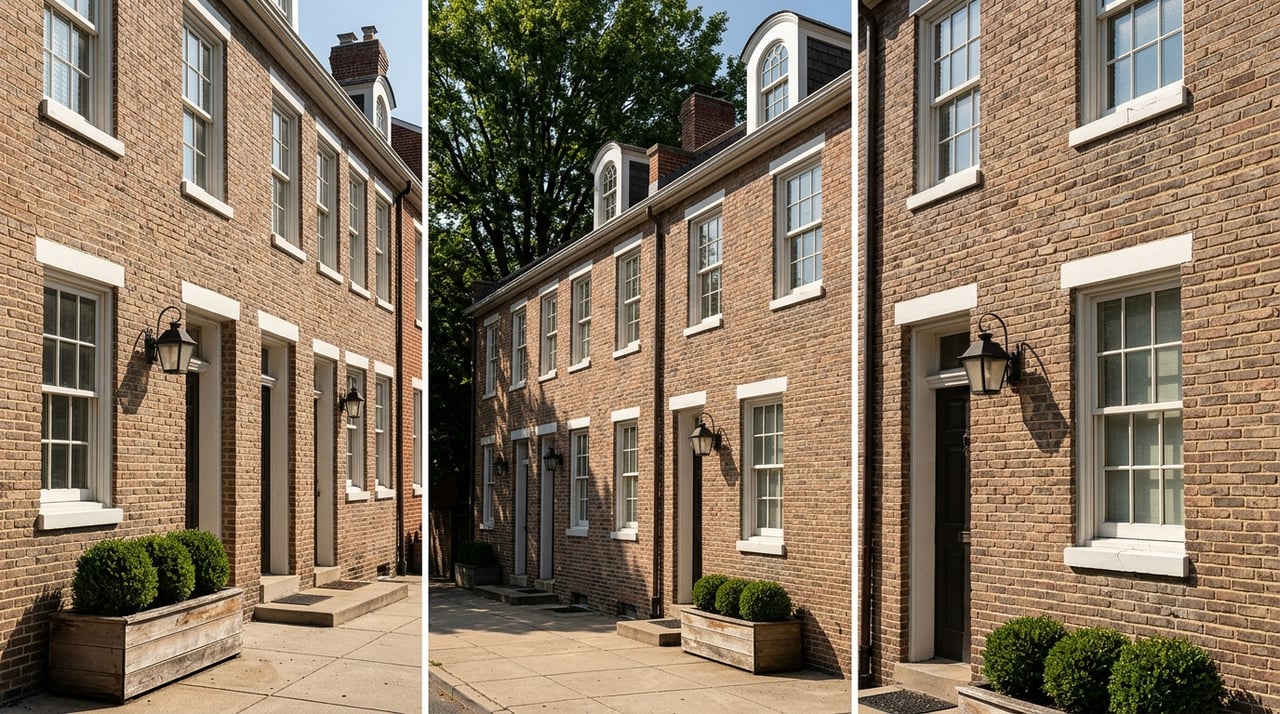
The first thing to understand is that "Lebanon" on a map search is doing a lot of work it was never built to do. The City of Lebanon itself is a dense grid of rowhomes, twins, and older duplexes, much of it built decades ago and a meaningful share of it owned by landlords rather than owner-occupants. Surrounding the city is a ring of boroughs and townships, including North Cornwall, South Lebanon, North Lebanon, Palmyra, Annville, and Cornwall Borough, where the housing stock skews toward detached single-family homes, newer construction, and larger lots.
When a portal reports a countywide median, it is blending two housing markets that behave nothing alike. The city's median price per square foot sat at $138 over the same three-month window, while the county's figure was $180. That $42 gap is not measurement noise. It is the difference between buying an older attached rowhome that may need updating and buying a newer detached home with more modern systems and a yard.
The Days-on-Market Inversion
Here is where it gets genuinely strange, and where most generic market guides stop looking. In a normal market, the cheaper segment should move faster because more buyers can afford it and competition is fiercer at the entry point. That is not what happened here. The city's homes are taking longer to sell than they did a year ago, while the county's overall pace sped up even as the median price climbed.
The explanation sits in what is actually selling in each pool. A meaningful share of the city's inventory is investor stock, purchased by buyers running rehab math rather than racing to close before a rate lock expires. Those transactions can move slowly by design, with buyers waiting for the right number rather than the right house. The county's faster pace, on the other hand, is being driven by a wave of new and near-new construction that barely lasts long enough to photograph. There is so little competing inventory that anything freshly built tends to go under contract almost as soon as it lists, which drags the average days-on-market number down even as the median price goes up. Two very different mechanisms, one confusing headline.
Where the Money Is Actually Building
If you want to see the county's price growth in physical form, look at where the crews are working. The Reserve at North Cornwall Commons, a master-planned community from Garman Builders, is delivering three-story townhomes like the Blanton floor plan at 2,406 square feet, built to offer the feel of a single-family home at townhome pricing. A few miles away in historic Cornwall Borough, Pine Hill Building Co is finishing homes at The Cliffs at Iron Valley, steps from Iron Valley Golf Course, with at least one lot slated for completion in October 2026. Also in the Cornwall-Lebanon School District, Quinn Estates is offering larger estate-style homesites for buyers who want more land than a typical subdivision lot.
None of this construction activity is happening in isolation. The broader North Cornwall Commons corridor is also drawing commercial investment, with a TownePlace Suites by Marriott hotel that was targeted for a June 2026 opening and a fourth apartment building under construction by Byler Holdings. That combination of hospitality, multifamily, and for-sale housing investment in one corridor suggests the demand pulling the county median upward is not a short-term building spree. It looks more like a durable shift in where people and businesses want to be.
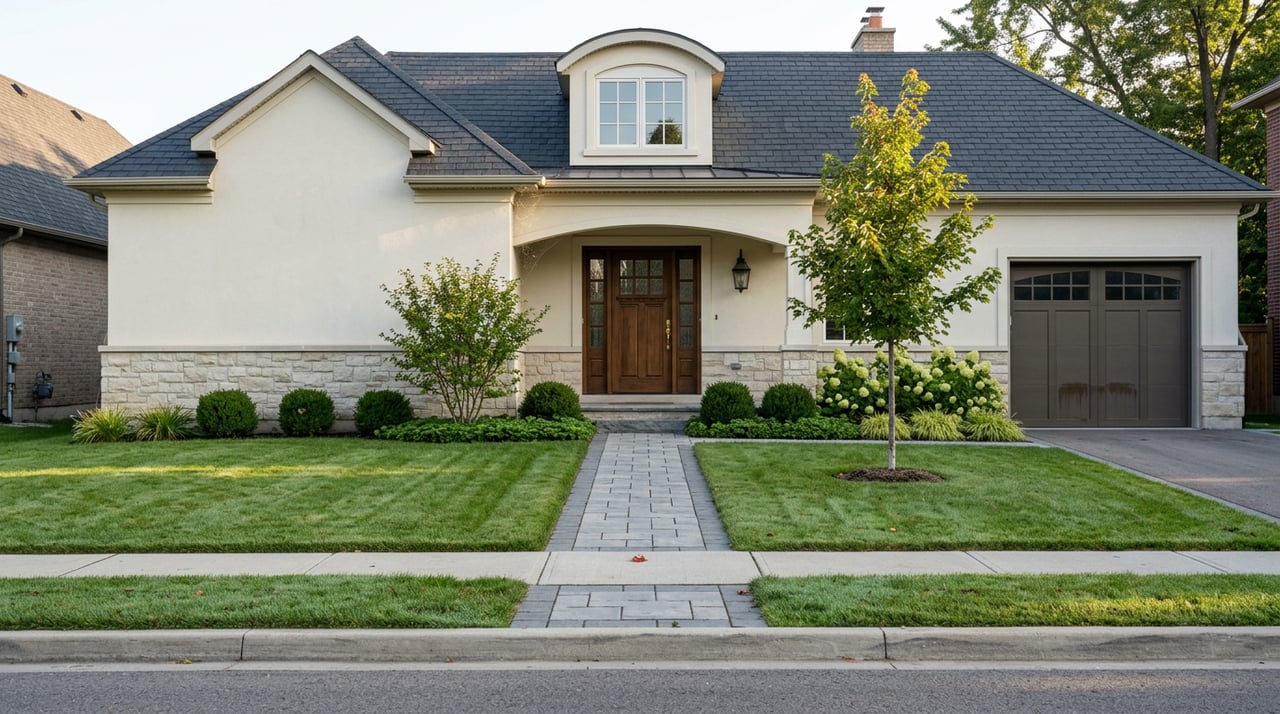
But the geography-equals-price story has a real complication worth naming, because it protects you from oversimplifying. Magnolia Place, a new modular home community in West Lebanon Township near the Rail Trail and the Lebanon Valley Mall, is selling homes starting at $159,900, well below the county median. And inside the city itself, 117 On The Boulevard is delivering brand-new luxury condominium units ranging from roughly 1,255 to nearly 2,000 square feet. New construction exists in the city, and affordable new construction exists in the townships. The real divide is not city limits versus township lines. It is housing type and age. A buyer comparing a 1960s rowhome in the city to a 2026-built townhome at The Reserve at North Cornwall Commons is not comparing two prices in the same market. They are comparing two different products that happen to share a mailing address.
The Carrying Cost Nobody Puts in the Offer
Price and days on market are only half the picture. The other half shows up on the tax bill, and it varies sharply within a few miles. For the first half of 2026, the City of Lebanon's total real estate millage runs to roughly 33.08 mills, while Palmyra Borough sits closer to 28.95 mills and North Lebanon Township comes in around 25.81 mills. A mill equals one dollar of tax for every $1,000 of assessed value, and in Lebanon County, properties are assessed at 100 percent of market value, so the gap between those millage rates translates almost directly into a gap on your bill rather than getting smoothed over by an outdated base-year assessment the way it might in some other Pennsylvania counties.
Run the math on a $300,000 home and the difference is not trivial. At the city's rate, you would owe roughly $9,925 a year in combined municipal, county, and school taxes. At North Lebanon Township's rate, the same assessed value would owe closer to $7,744. That is a swing of more than $2,000 a year that never shows up in the sale price, the square footage, or the median headline, and it can matter as much to your monthly budget as a quarter point on your mortgage rate. If you want to see how one township breaks its own rate down line by line, South Lebanon Township publishes its municipal, fire, county, and school district rates on its own tax page, and it is worth five minutes before you fall for a listing photo.
How to Actually Shop This Market
If you are comparing neighborhoods across Lebanon County, treat the word "Lebanon" as a starting point, not an answer. Ask which specific borough or township a listing sits in, and pull the millage rate for that jurisdiction before you compare it to another property a few miles away. Look at whether the comps you are using are genuinely similar in age and construction, since a countywide or even city-wide median can average together a 1920s rowhome and a 2026 townhome in a way that tells you nothing useful about either. And pay attention to what kind of inventory you are actually looking at. If it is new or near-new construction, expect competition and a fast timeline, because that is exactly what the county's 8-day average is telling you. If it is older stock in the city, there may be more room to negotiate, since a 17-day average suggests buyers are not sprinting to close.
Anyone shopping the Lebanon market month to month can also check current figures directly through the Lebanon County Association of Realtors, which publishes updated statistics drawn from the county's multiple listing service.
That is the kind of comparison a countywide search bar cannot do for you, and it is exactly where local, on-the-ground guidance pays for itself. If you are trying to figure out what a specific municipality's tax rate, housing stock, and pace of sale actually mean for your budget, the team at Hoover Lynam & Associates works this market street by street, not zip code by zip code.
A Few Quick Questions
Does buying in a township always mean a lower tax bill than buying in the city? Not automatically. Palmyra Borough's rate sits between the city and North Lebanon Township, and rates vary by school district as much as by municipality, so check the specific jurisdiction rather than assuming township means cheaper.
Is the city's slower selling pace a sign of weak demand? Not necessarily. It more likely reflects a housing stock that includes a large share of investor-owned and older properties, where buyers take longer to negotiate price and condition than they would on a move-in-ready new build.
Where is most of the new construction in Lebanon County happening right now? The North Cornwall Commons and Cornwall Borough corridor has the heaviest concentration of active new-home communities, alongside smaller pockets like Magnolia Place in West Lebanon Township and 117 On The Boulevard inside the city itself.
Ready to see what a specific municipality's numbers mean for your own move? Get your home valuation and start the conversation with a team that already knows which Lebanon you mean.